

Marthagården
A space for sustainable beginnings
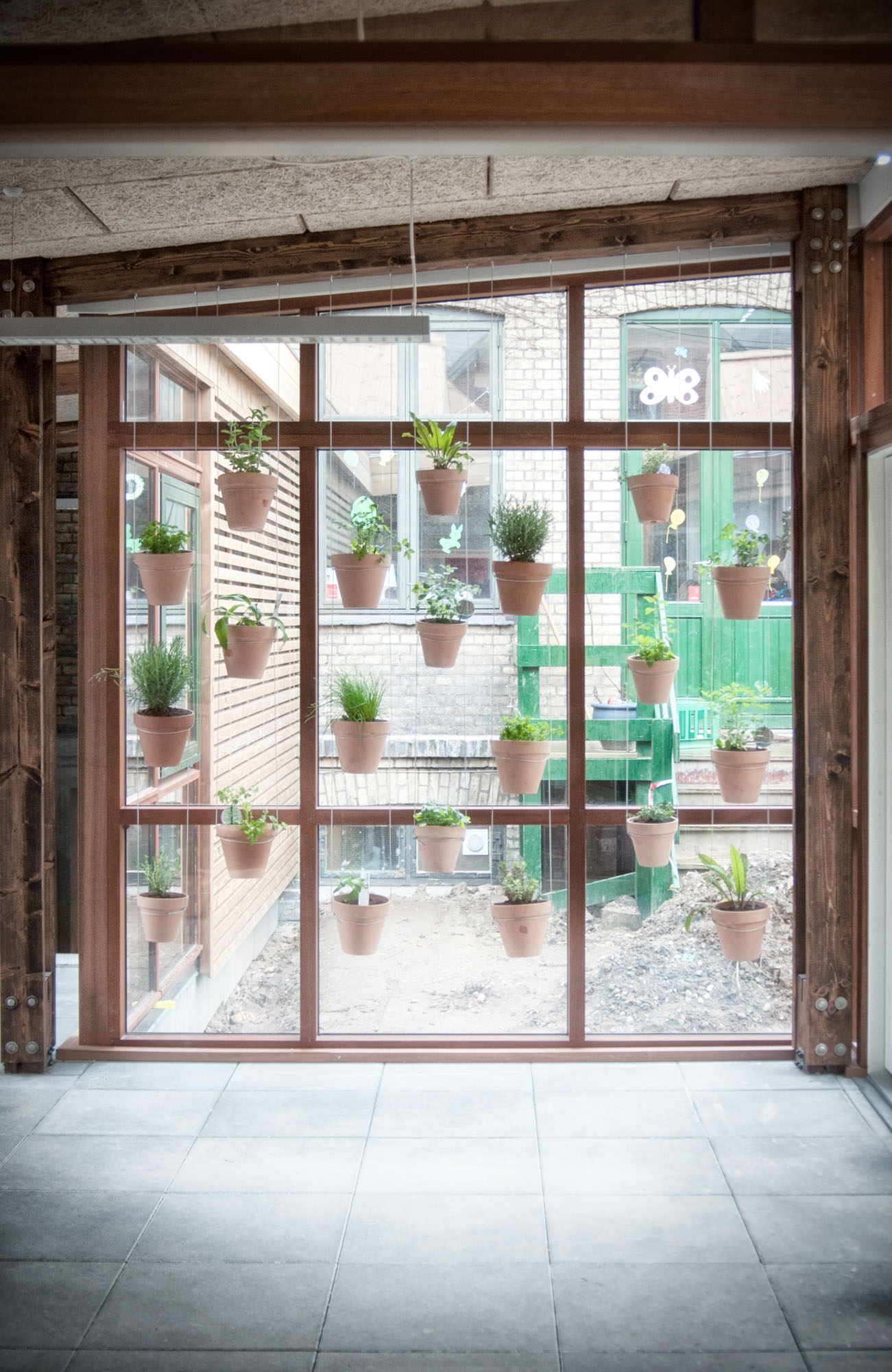
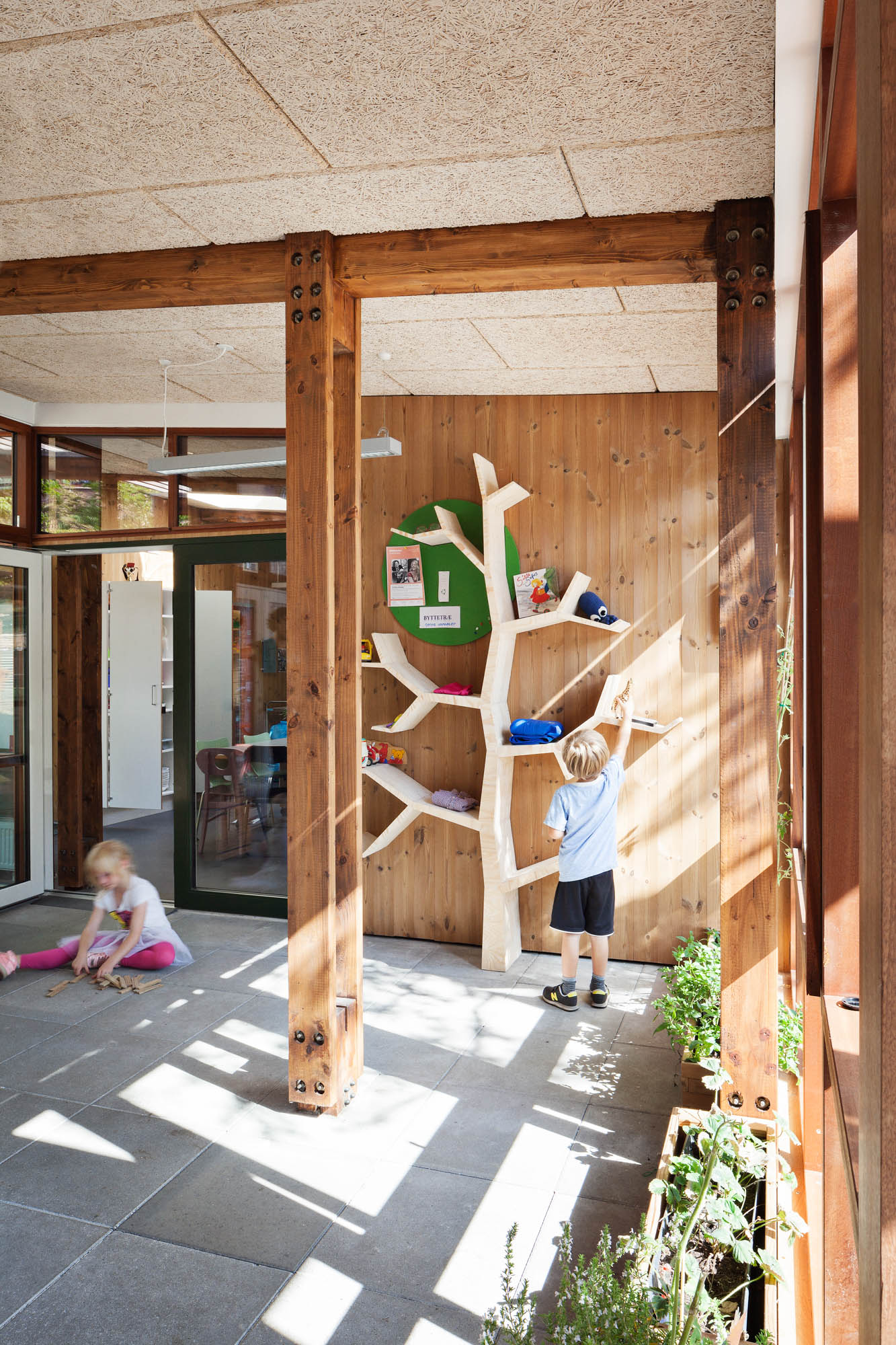
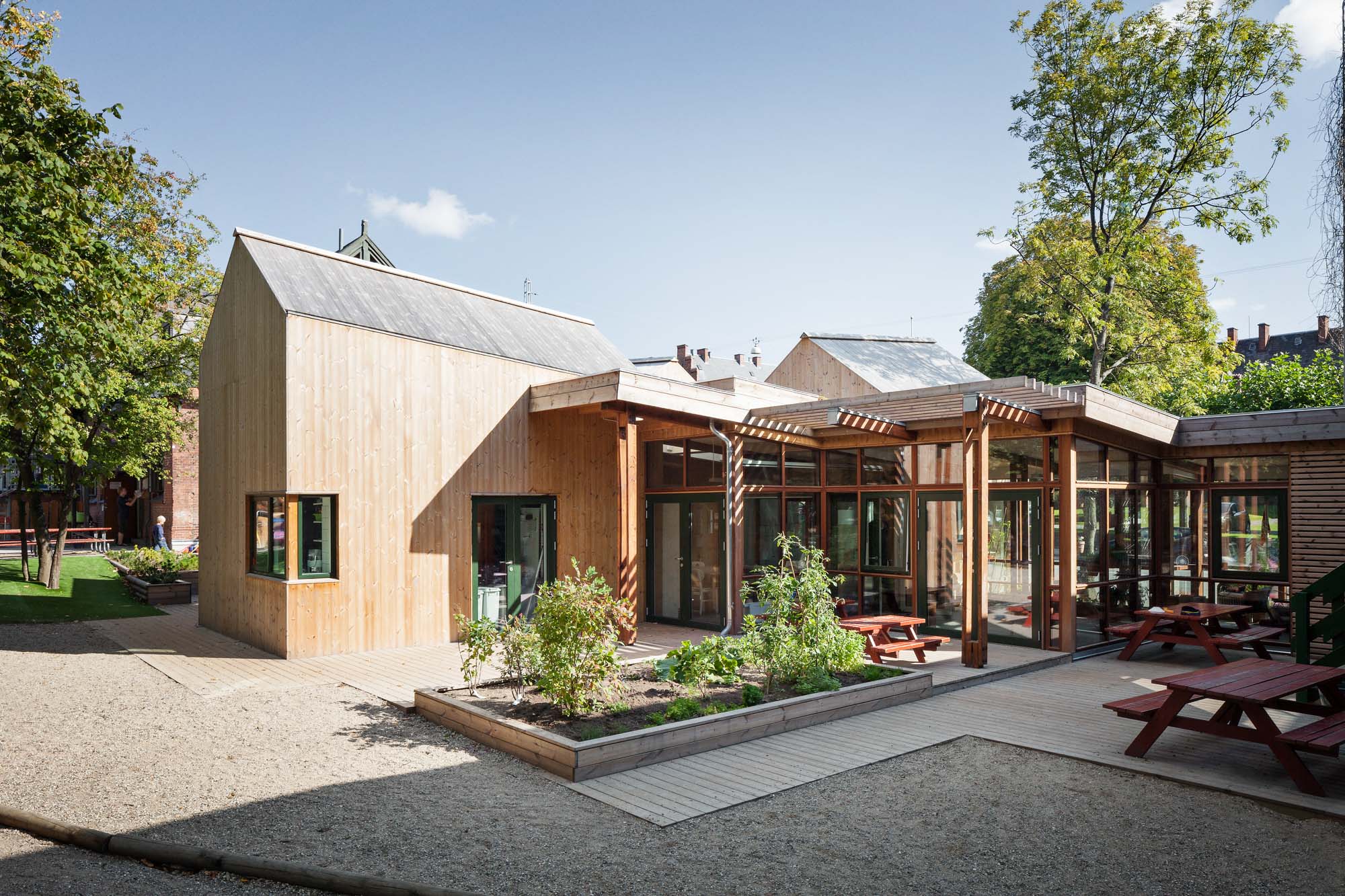
The rehabilitation and extension to the children’s institution Marthagården integrates sustainability into children’s daily lives. Here, children actively learn about food production, organic farming, preparation, and composting.
The institution, which has operated for over 125 years, was previously divided into two separate sections, limiting interaction between staff, parents, and children. The renovation and extension have unified the institution, creating a shared entrance.
Location
Frederiksberg, Danmark
Area
1 000 m2
Typology
Institution
Collaborators
Arkhus Bygningsrådgivning
Esbensen Rådgivende Ingeniører
Year
2013 – 2014
Status
Completed
Client
Diakonissestiftelsen
Services
Architectural consulting
Photos by
Laura Stamer
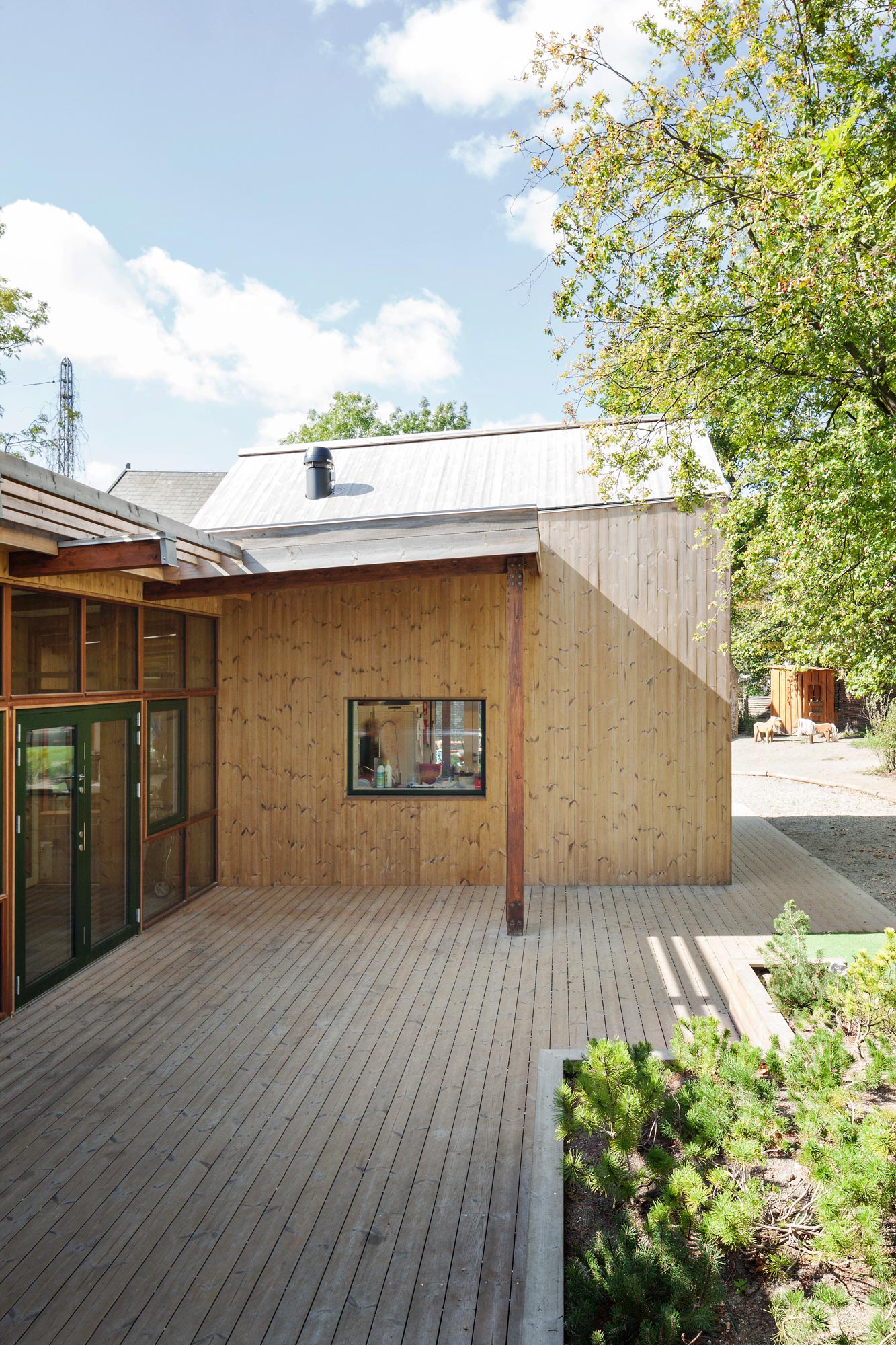
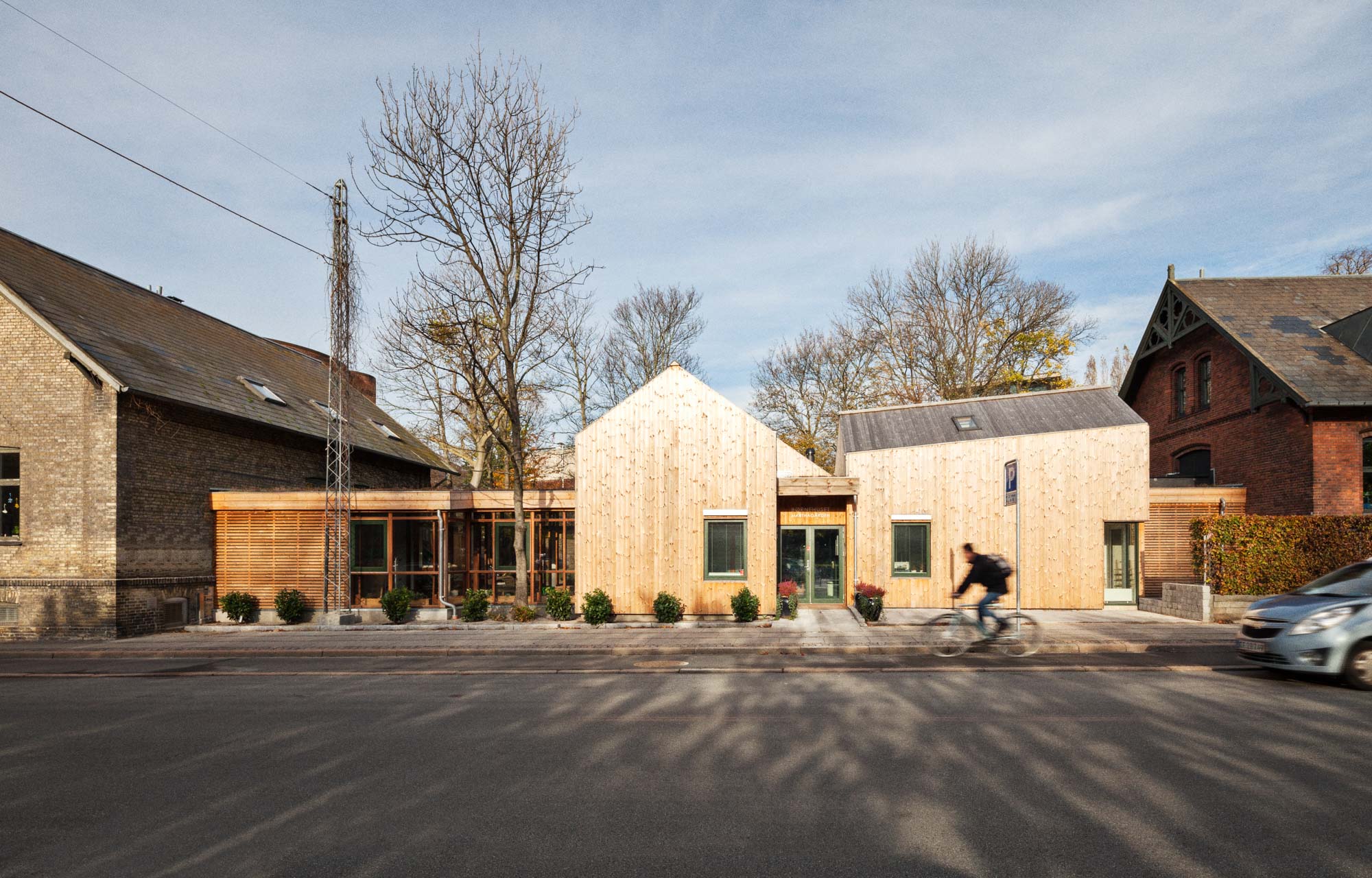
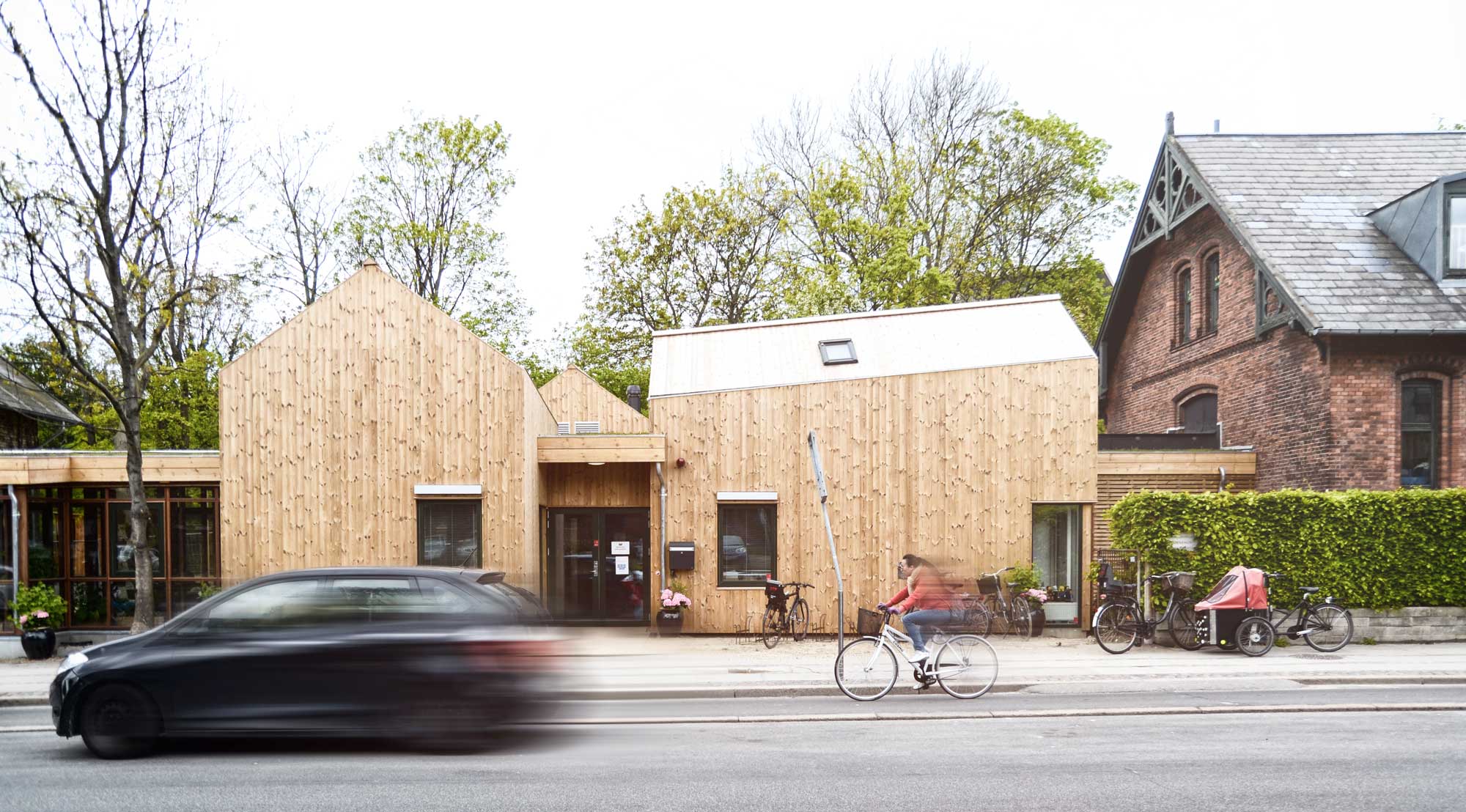
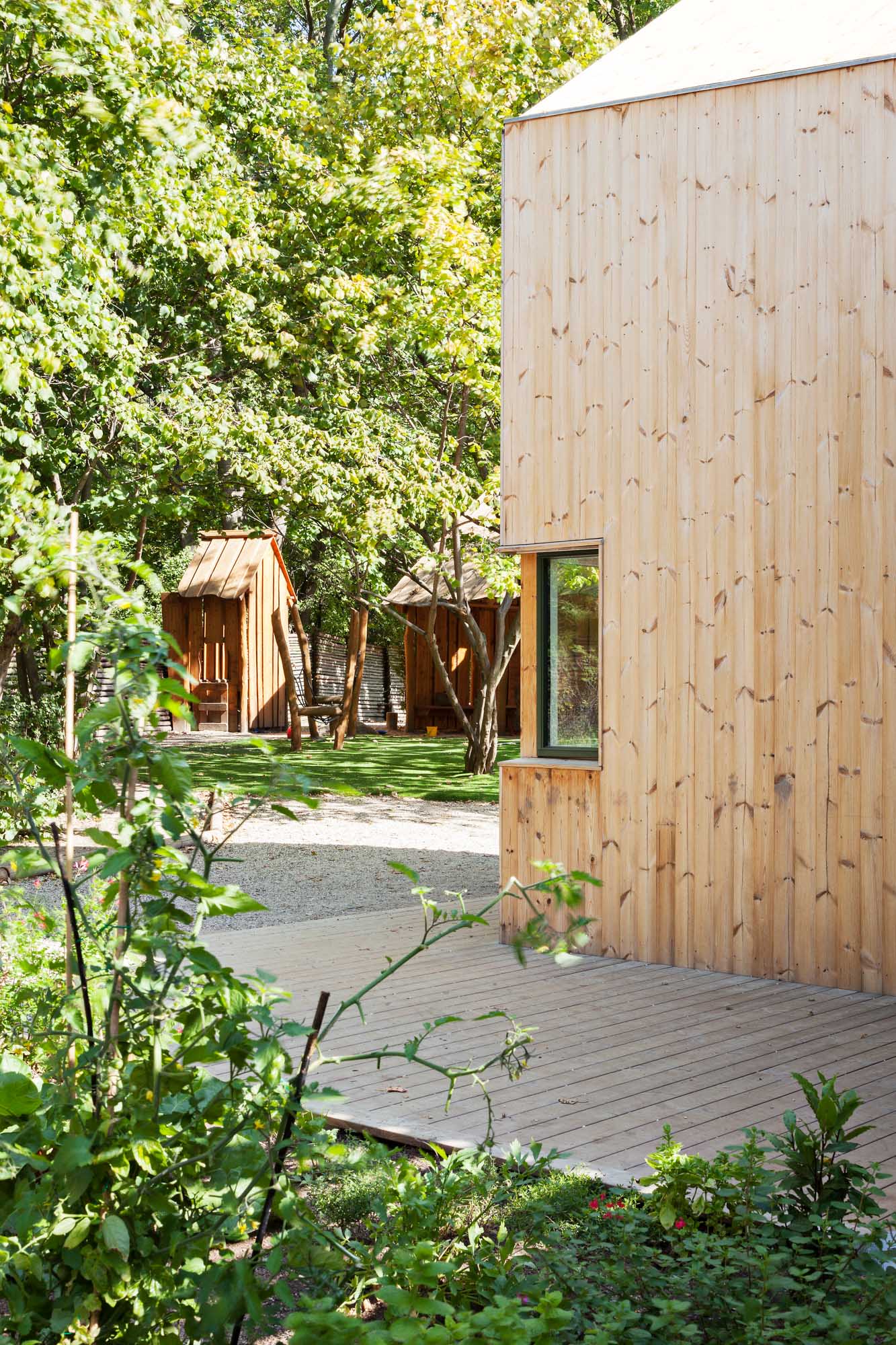
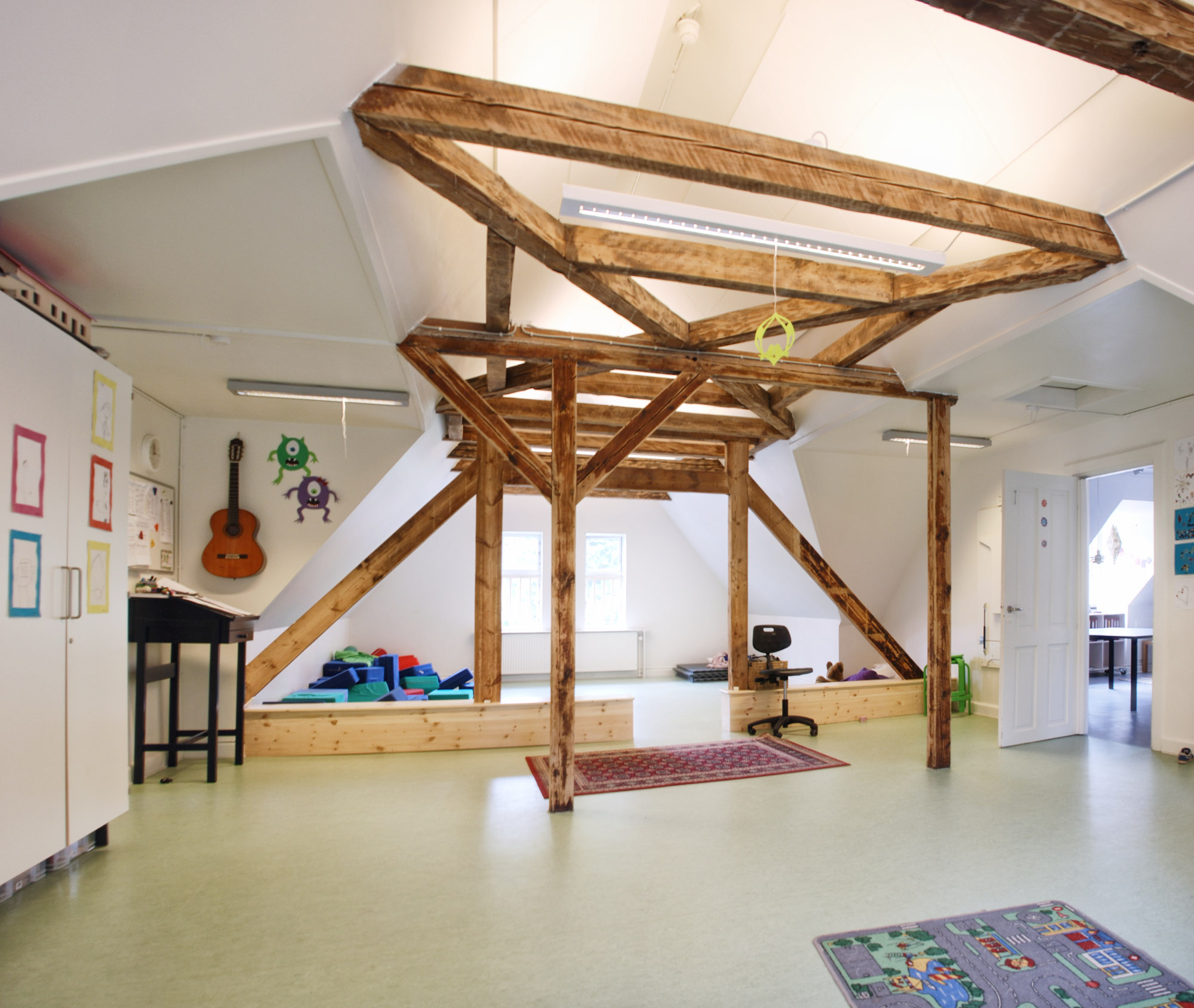
The rehabilitation is rooted in preserving and repurposing existing structures. Reclaimed materials from the modernization of the original buildings were incorporated into the new extension. Additionally, six tons of wooden furniture were refurbished and reused instead of being discarded.
The energy-efficient design incorporates natural ventilation, passive solar heating, and rooftop solar panels, meeting the 2015 low-energy building standards. These initiatives result in minimized heating and cooling costs while maintaining a comfortable indoor climate.
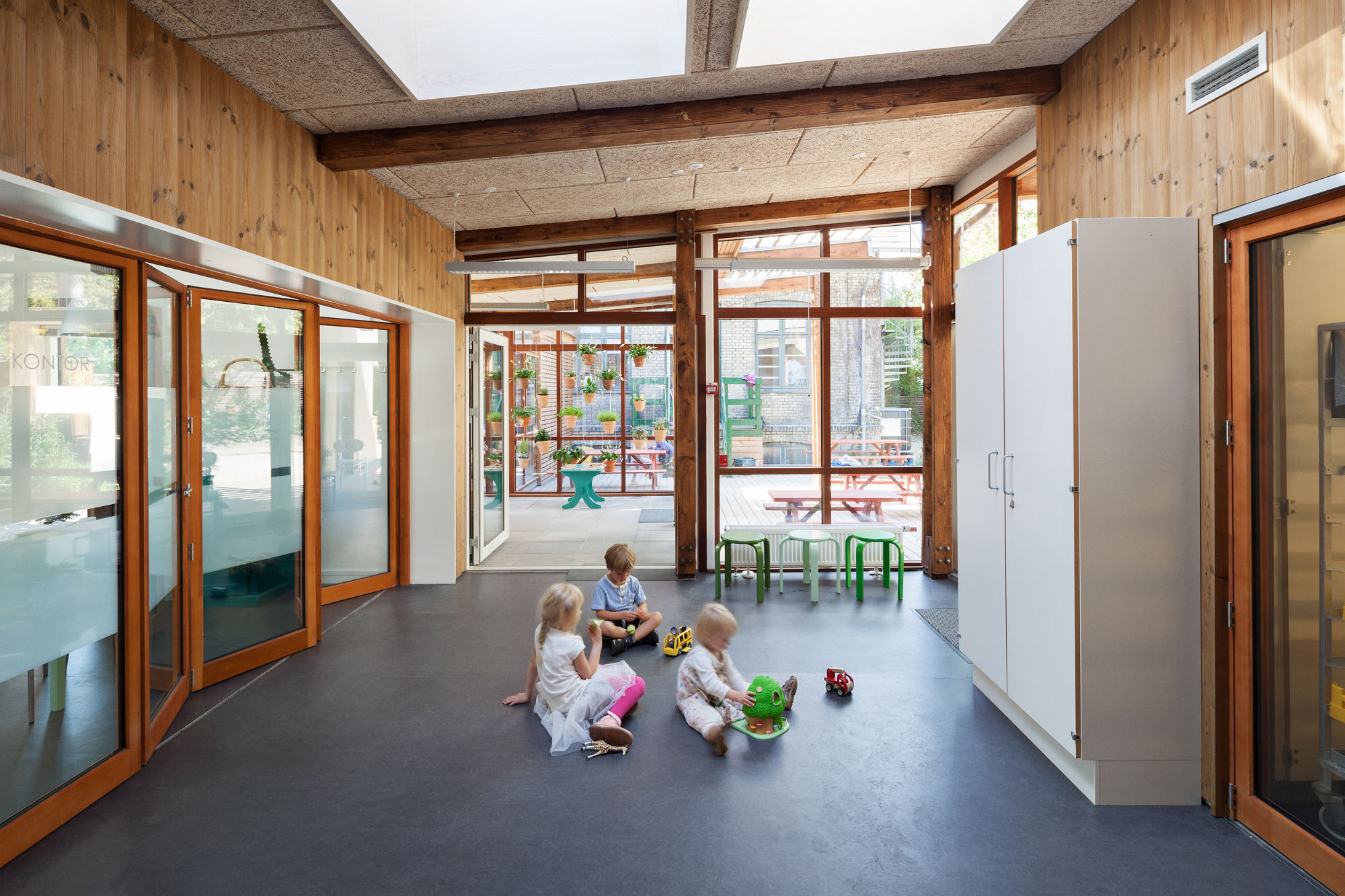
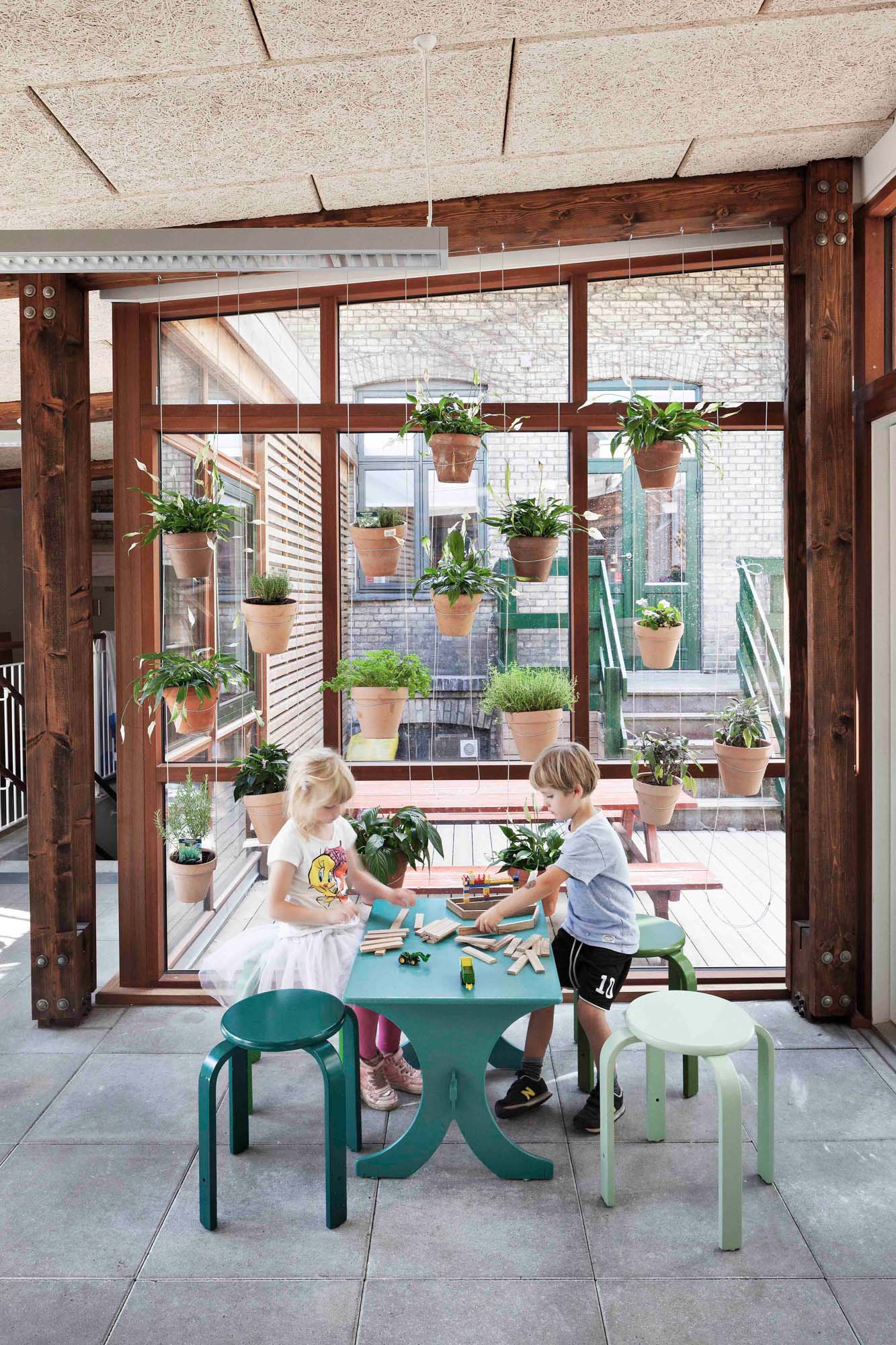
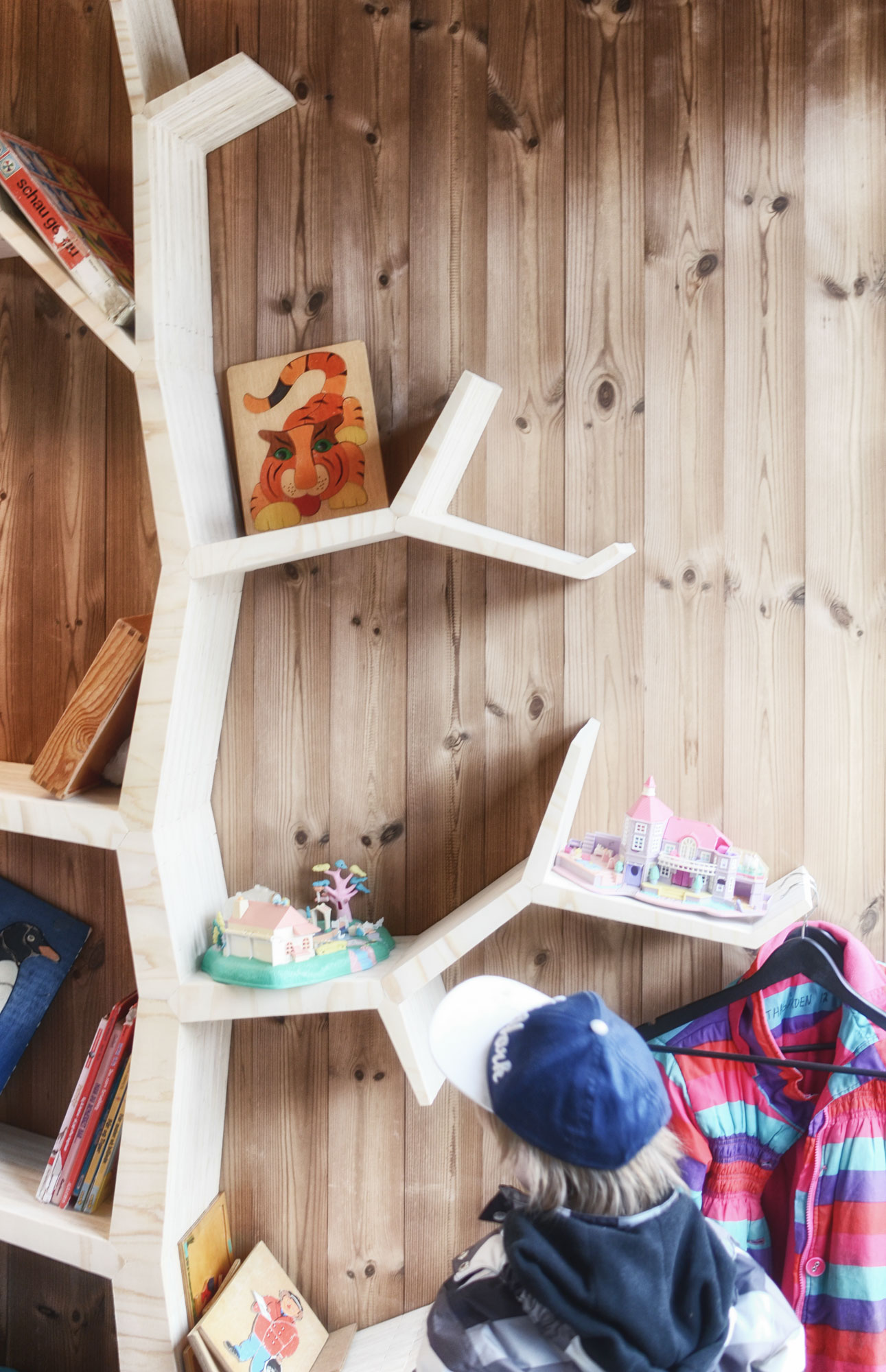
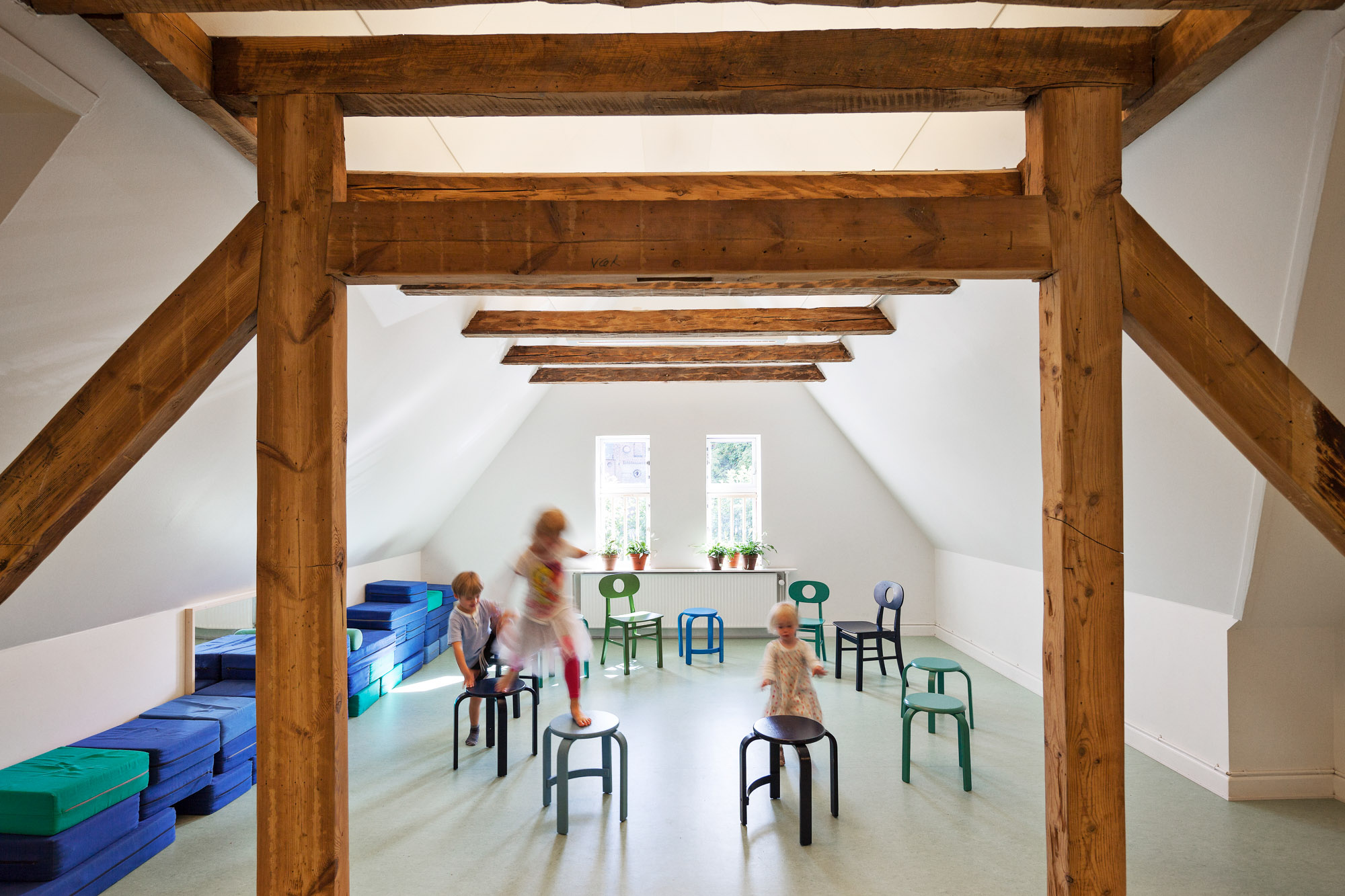
‘We can already feel a big difference from before to now. The children are thriving here — both out on the playground and indoors. The parents also take their time here, and sometimes the children don’t want to go home at all — the new surroundings are really a hit.’
Ingrid Fuglseth Jensen
General Manager at Marthagården
Impacts
- Significant CO2 reduction by repurposing existing structures instead of new construction.
- Use of organic and recycled materials, minimizing resource depletion.
- Six tons of wooden furniture refurbished and reused, reducing waste.
- Integration of natural ventilation, passive solar heating, and solar panels to lower energy consumption.
- Creation of an engaging learning environment where children actively participate in sustainability practices.
- Strengthened community interaction through shared spaces and a central entrance.

