Olympic Chair Pavilion
Design for disassembly
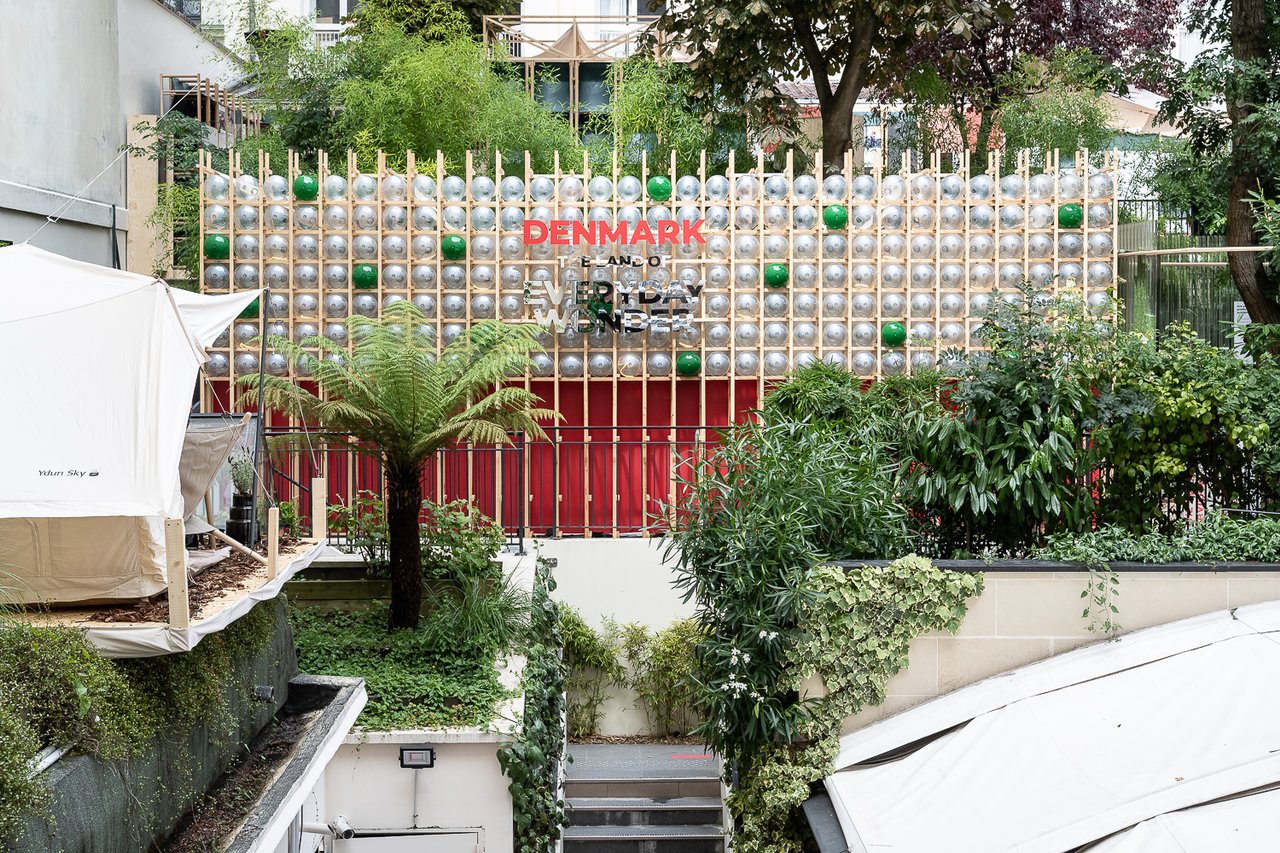
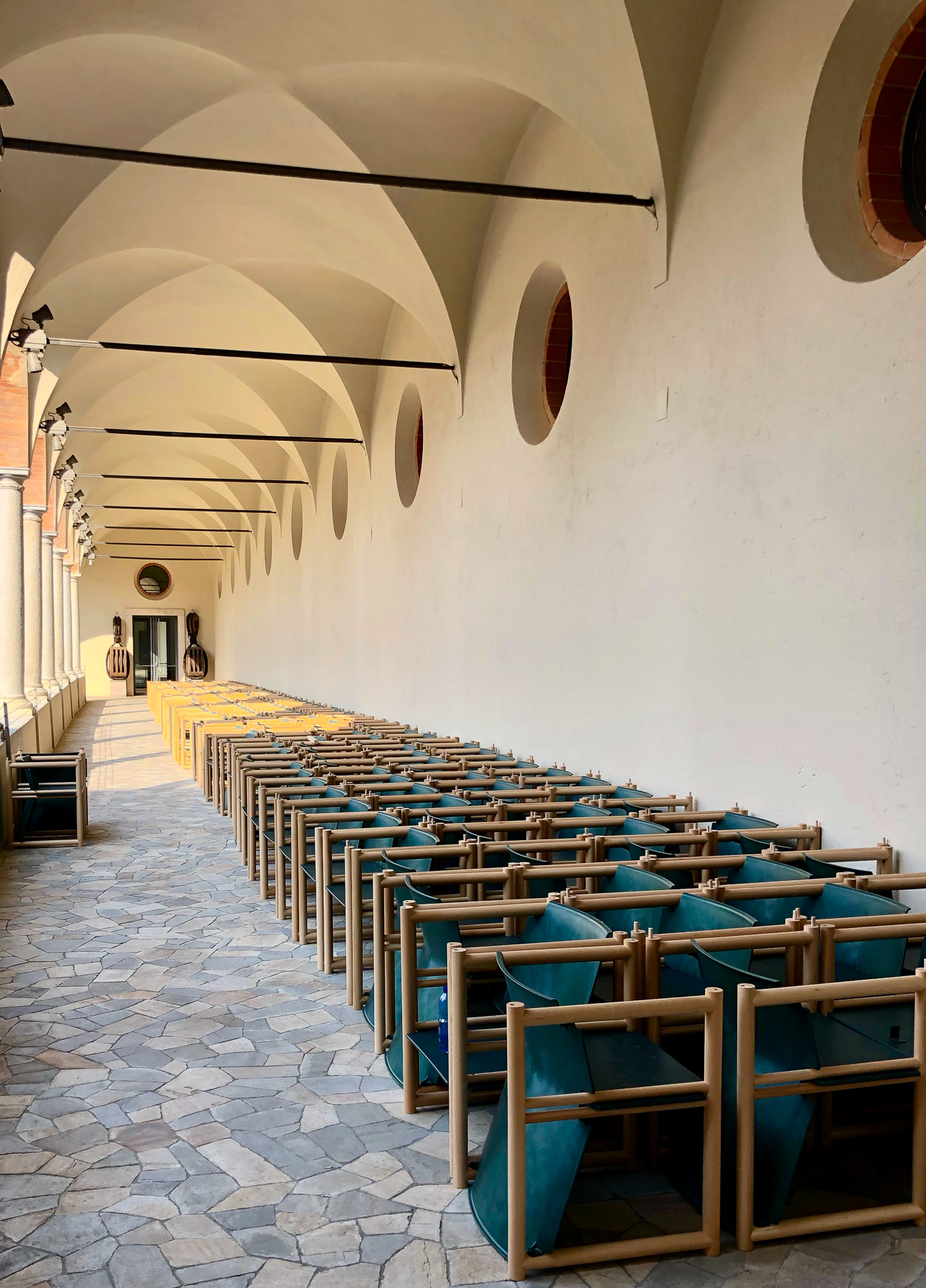
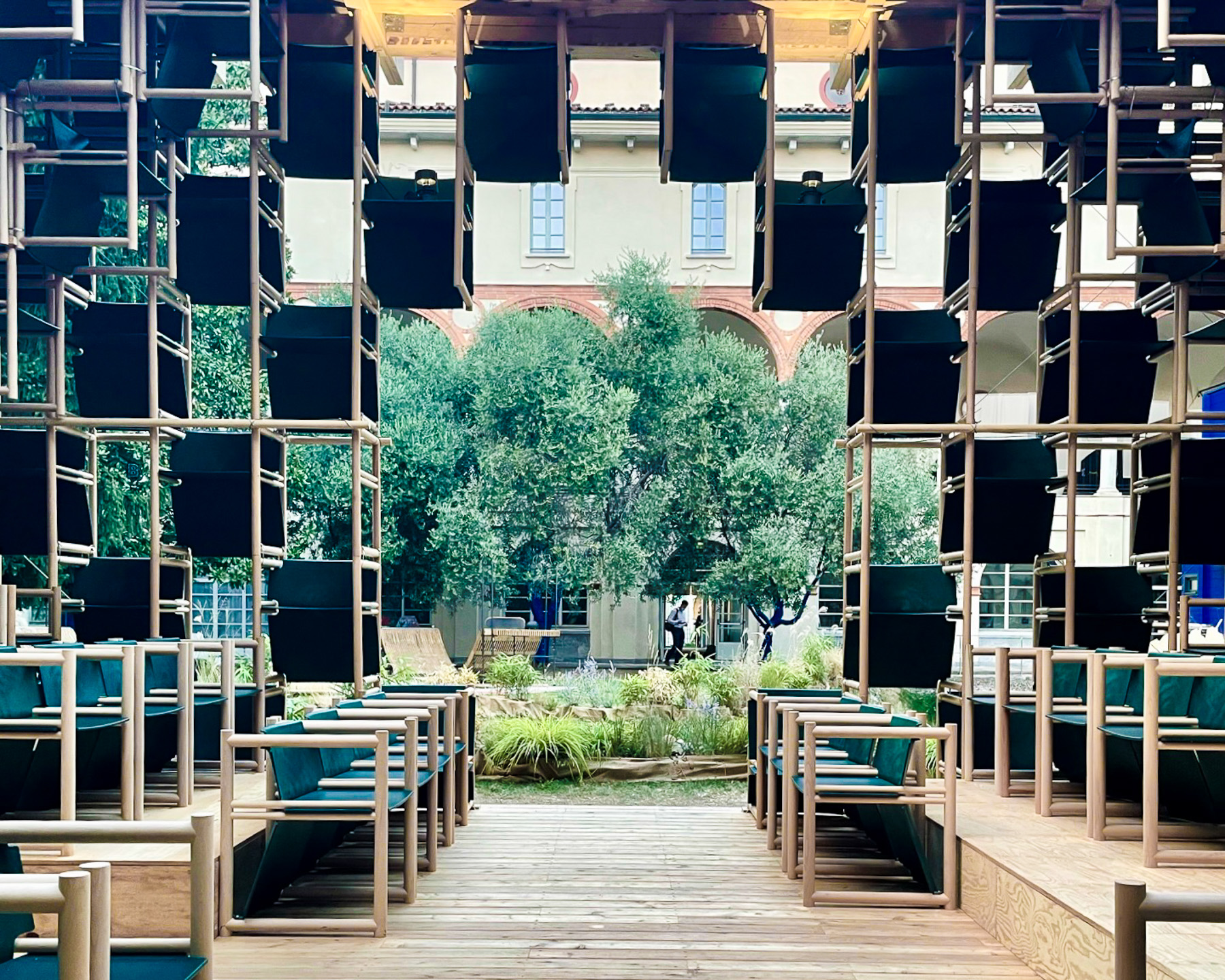
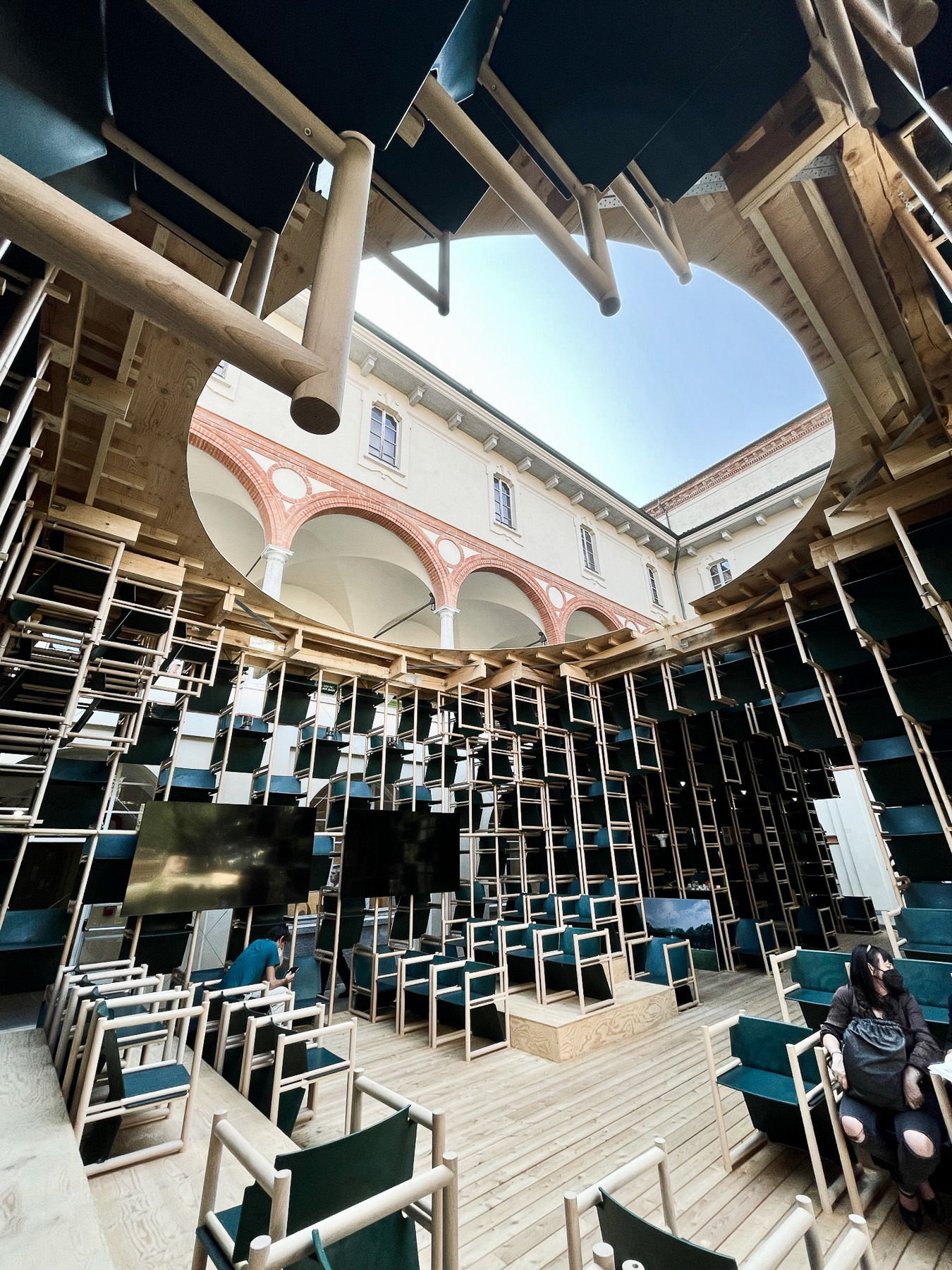
Lendager’s upcycled chairs are made from industrial and ocean plastic waste. Designed to be stacked and assembled, they form walls, shelving and façade systems, turning a waste stream into a functional and aesthetically refined building element.
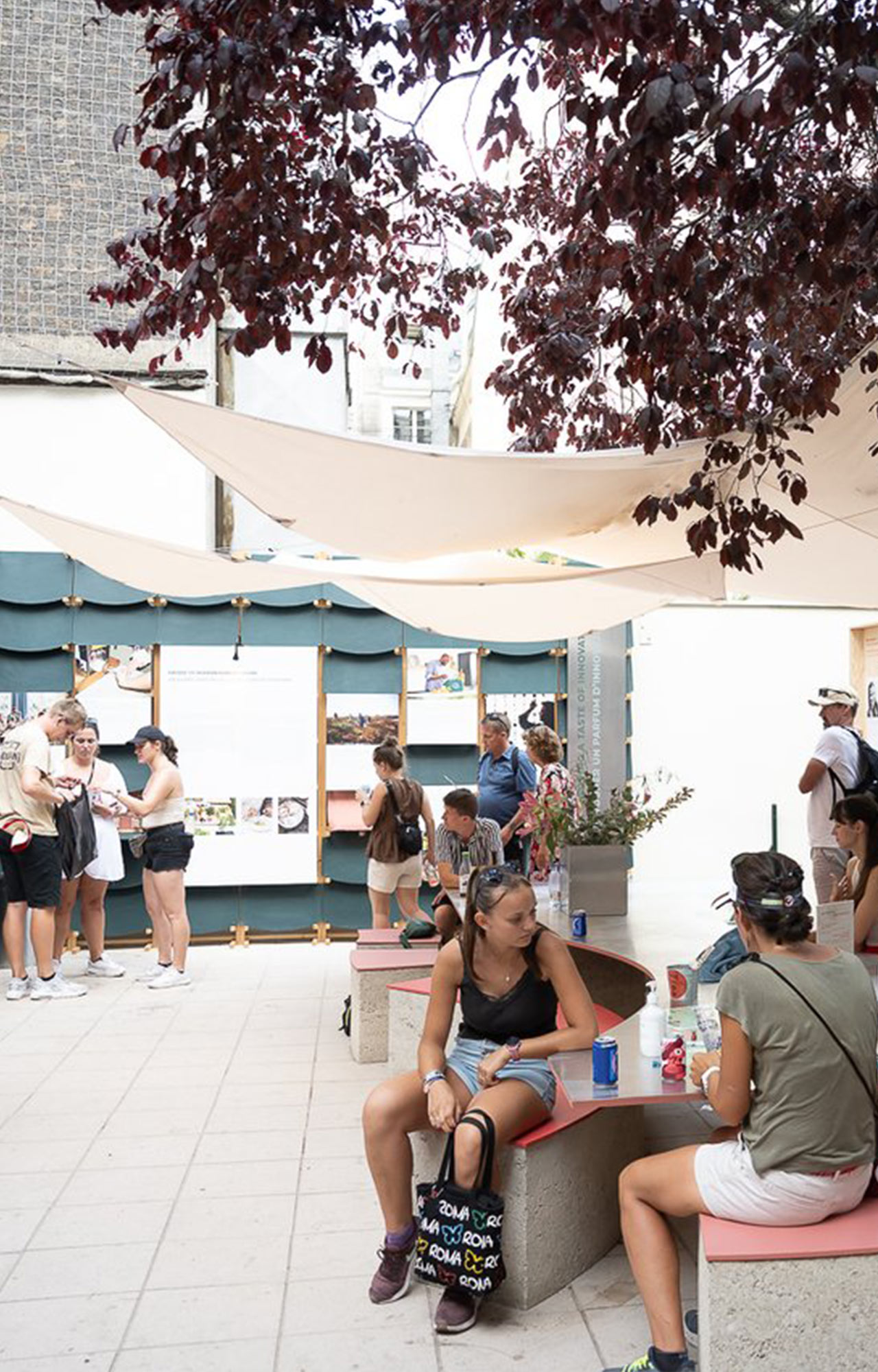
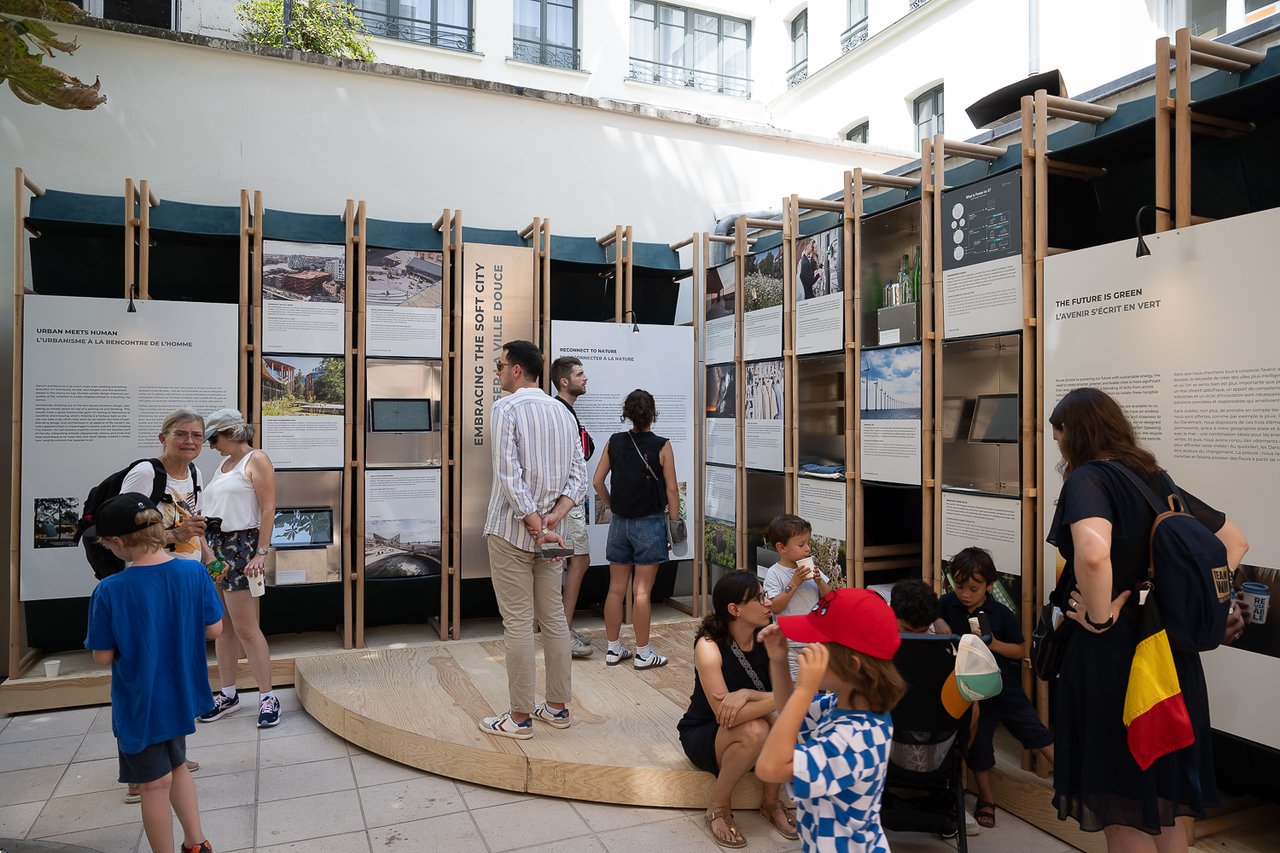
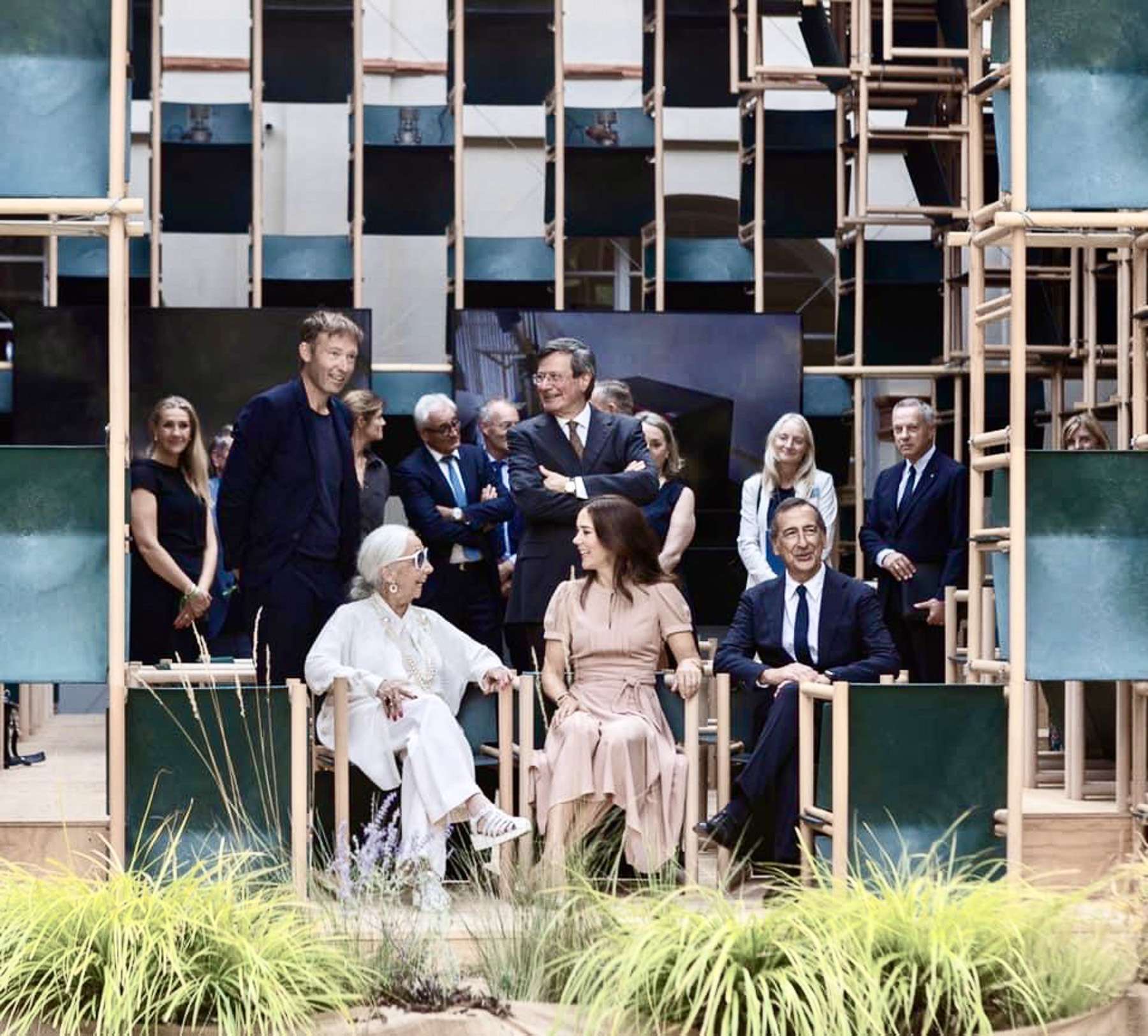
The concept was originally developed for the Danish Pavilion at the Tokyo 2020 Olympics and has since been presented in a range of international contexts, including FuoriSalone in Milan, the Olympic Games in Paris, Roskilde Festival, Folkemødet on Bornholm and New York Climate Week.
The project has also contributed to the establishment of a circular plastic recycling company in a Ugandan refugee camp, developed in collaboration with Care Denmark and Danida.
Location
Traveling exhibition
Area
Varies
Typology
Pavilion
Collaborators
Realdania
Visit Denmark
BRIQ
Structured Environment
Artelia
Dansk Arkitektur Center
Year
2021 – 2024
Status
Completed
Client
Visit Denmark
Services
Architectural consulting
Photos by
Thomas Deron
Lendager
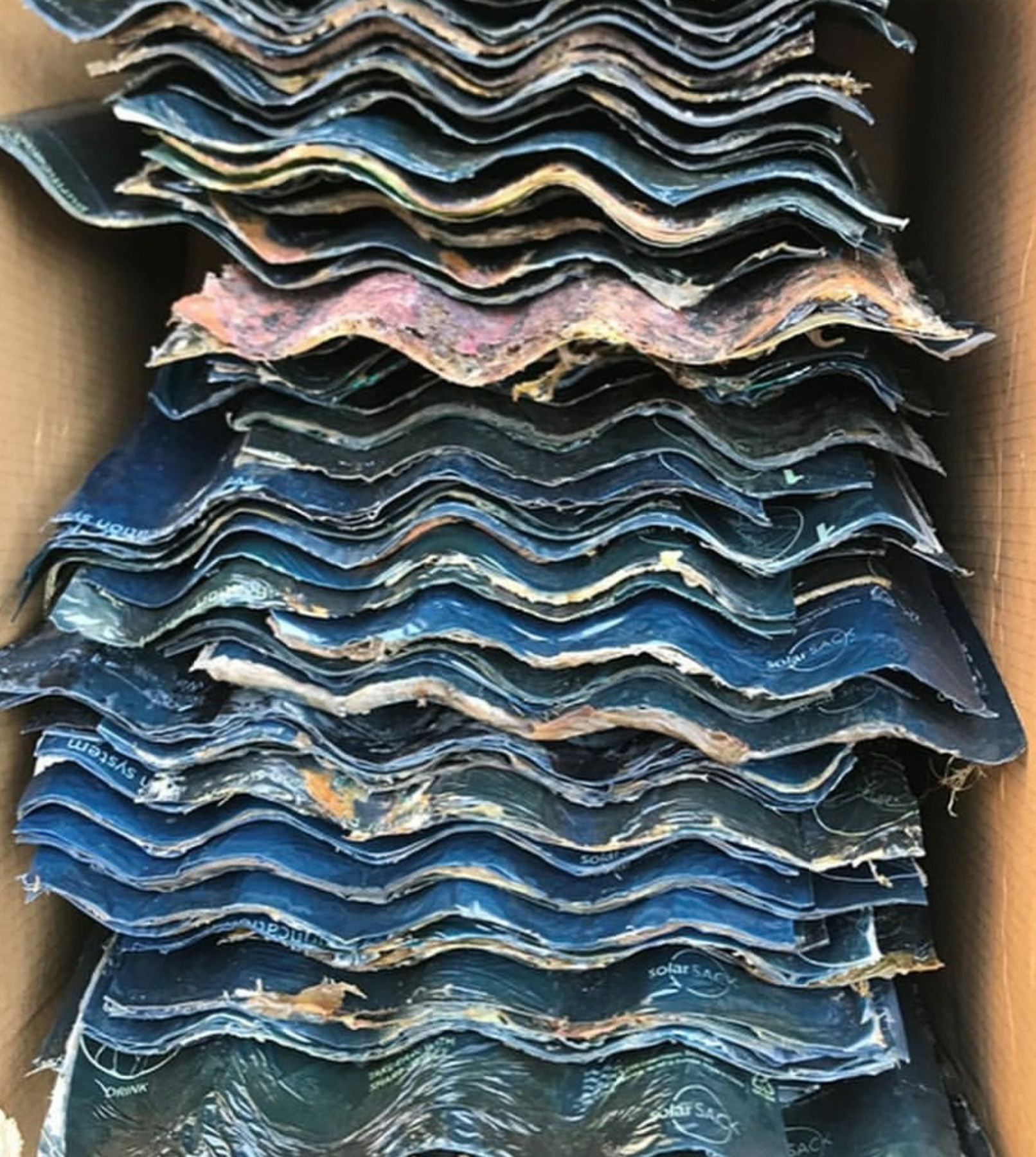



The chairs are made entirely from recycled materials, each component rooted in a specific waste stream. The seats are formed from ocean plastic, the backrests from used beer kegs from Carlsberg’s breweries, and the structural frame from recycled wood.
Rather than treating waste as a limitation, the design builds on its inherent qualities. The result is a durable, high-value product that reduces CO₂ emissions while giving new purpose to discarded materials.
‘It is more than a building, it is an ecosystem and a very powerful showcase of Danish design today. It shows that this iconic piece of Danish design – a chair – can be so much more. It addresses a fundamental problem with major events – waste – and rethinks how a pavilion is used and financed while still maintaining a high aesthetic quality. It is almost Olympic in its iconic and monumental design.’
The jury
Danish Design Award 2021
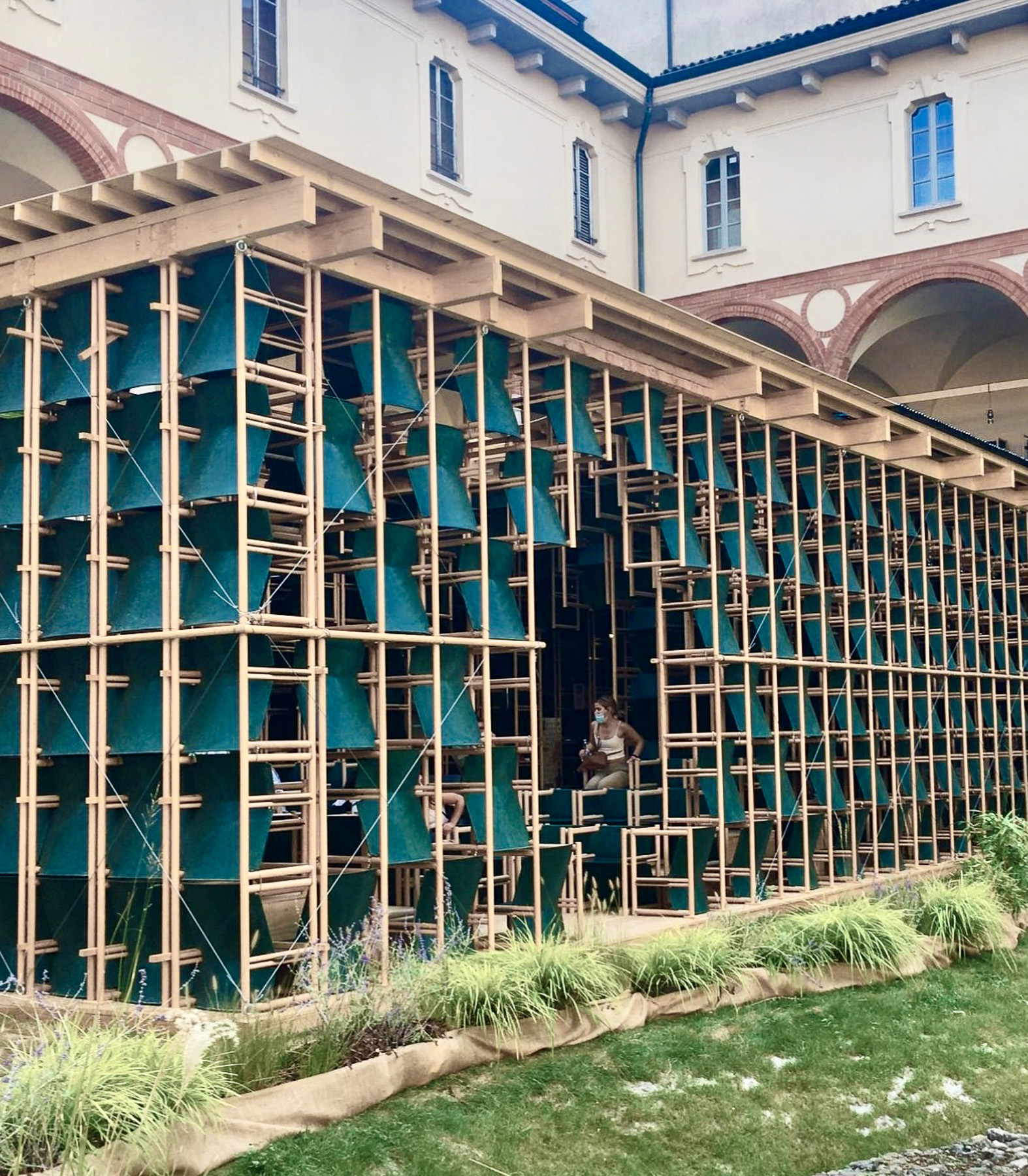

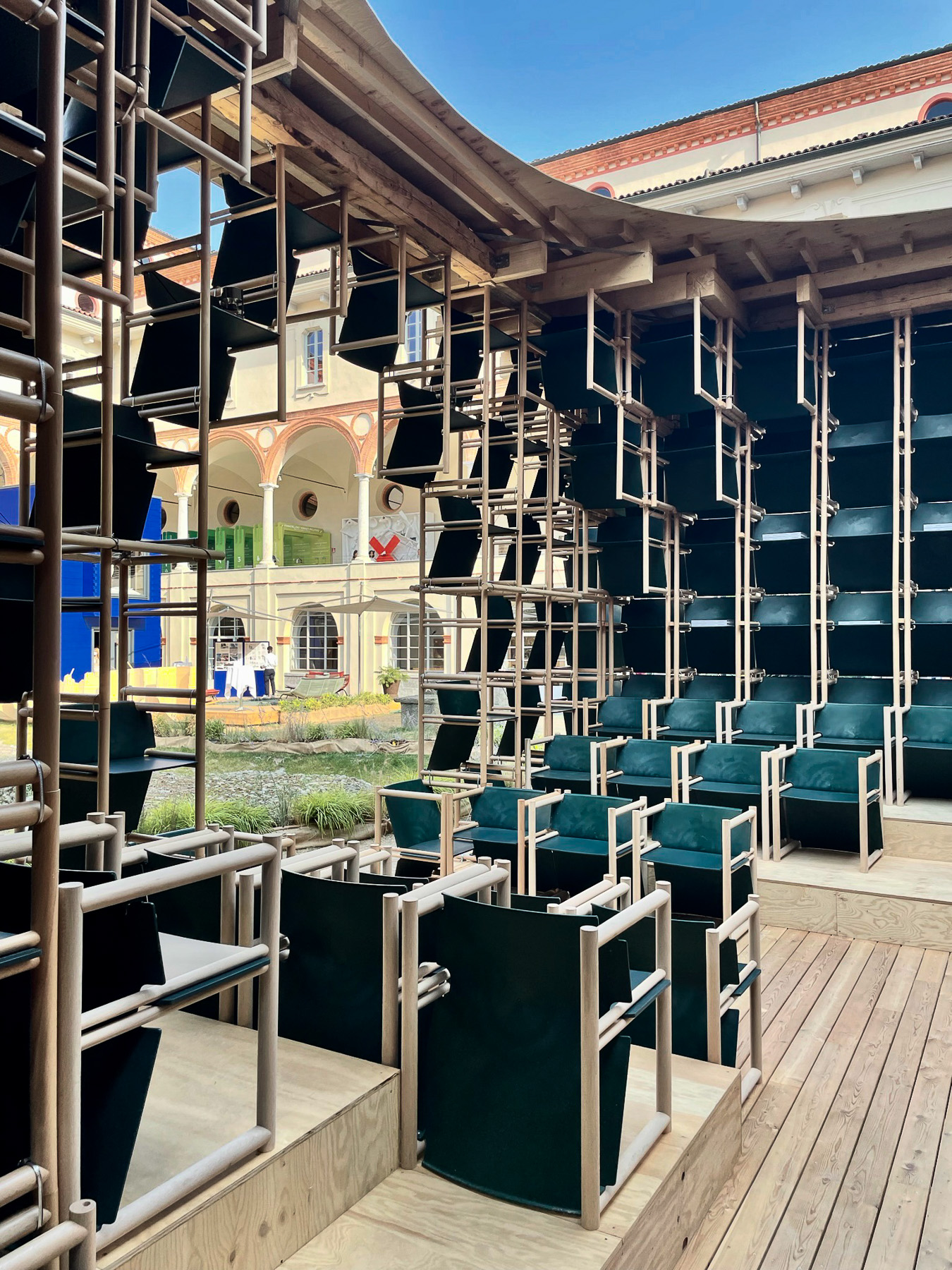
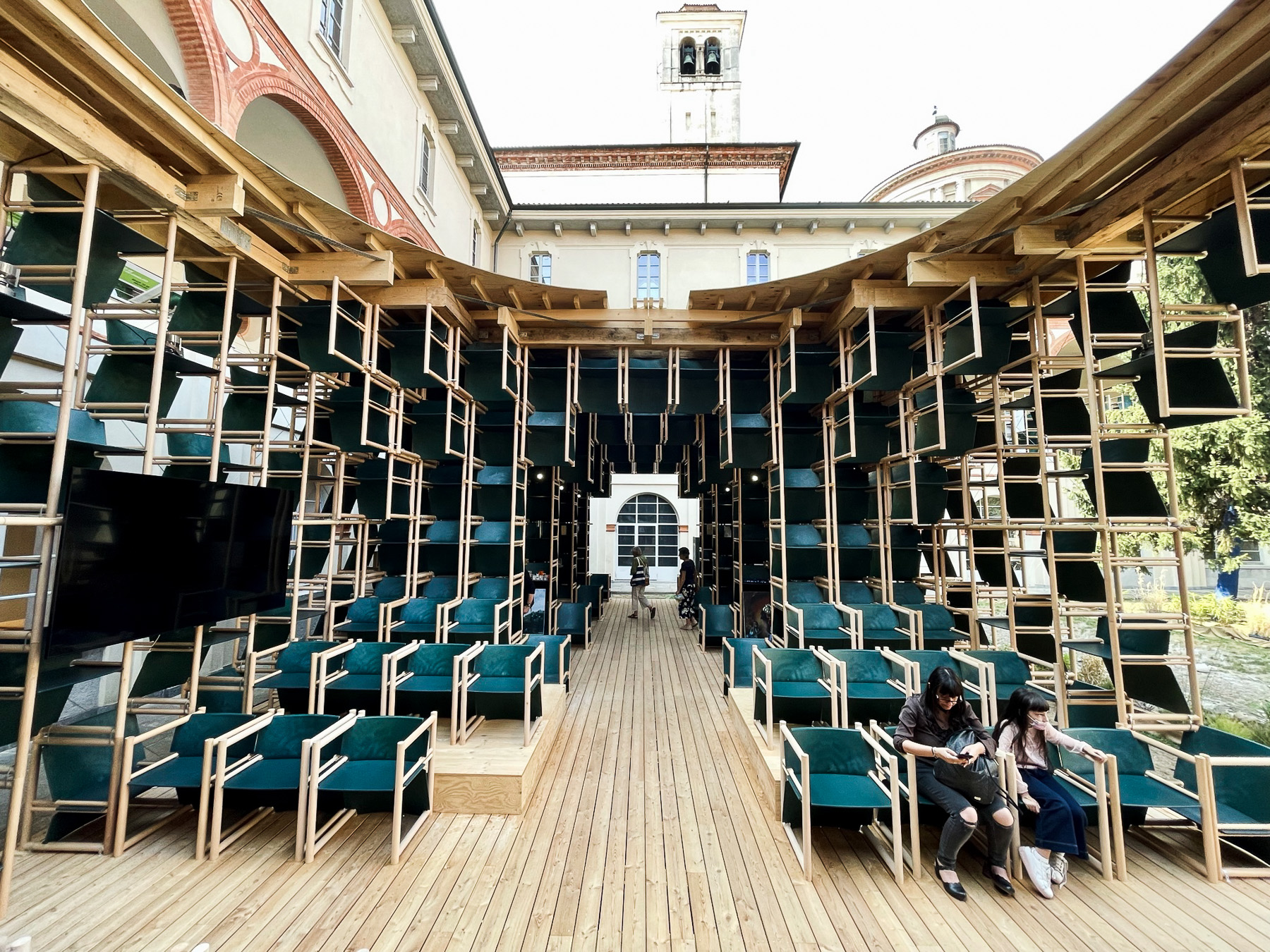
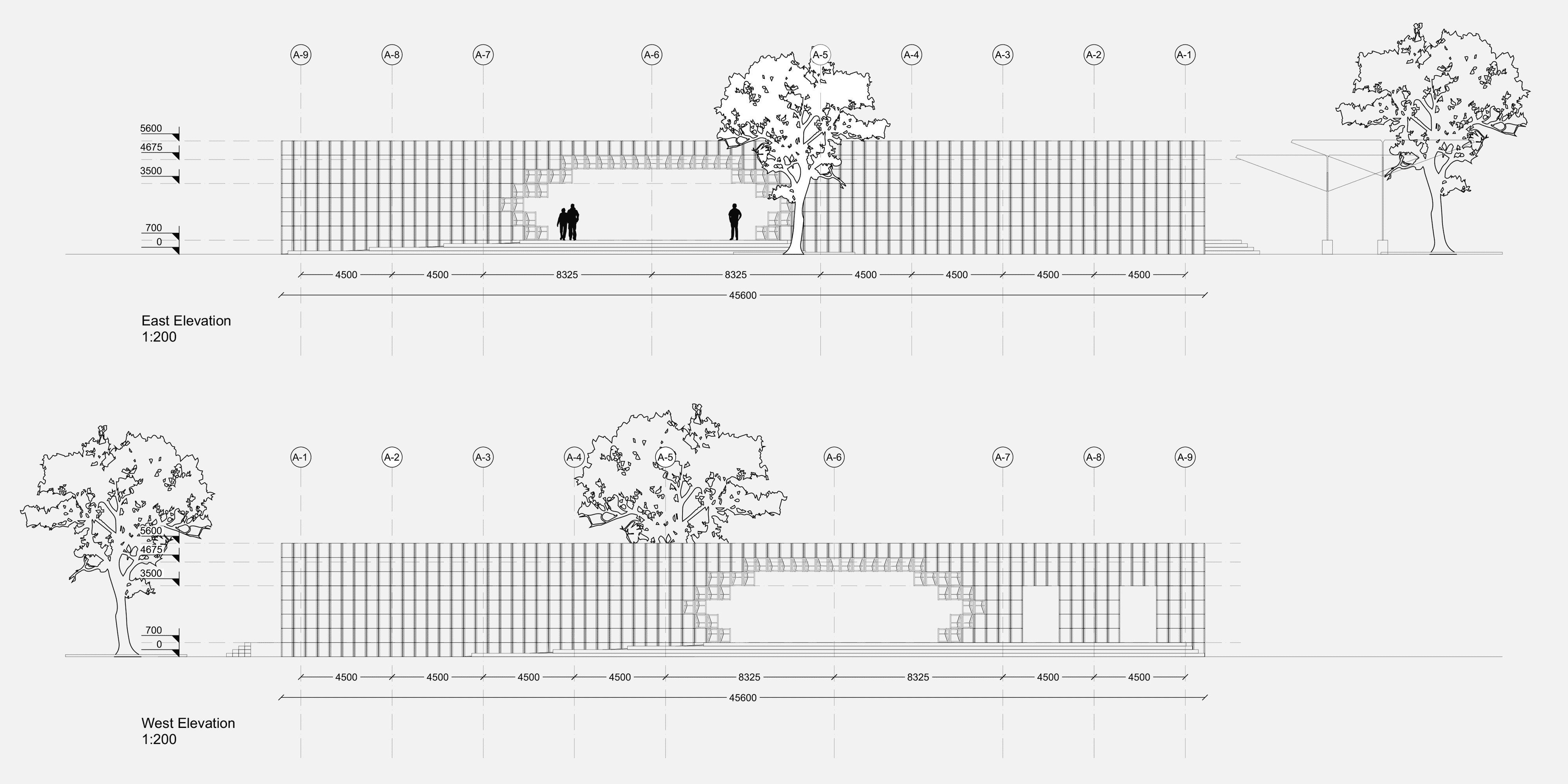
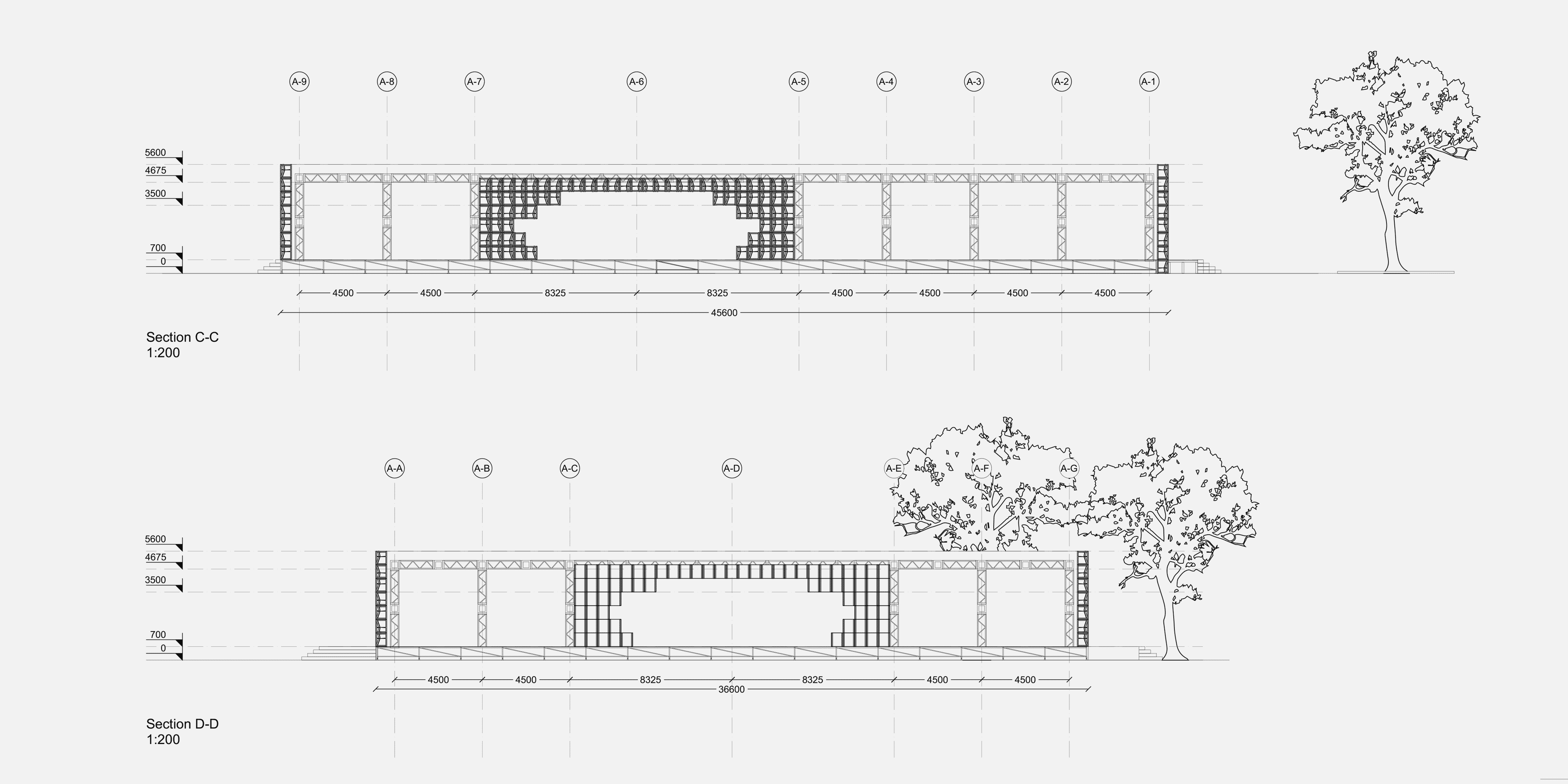
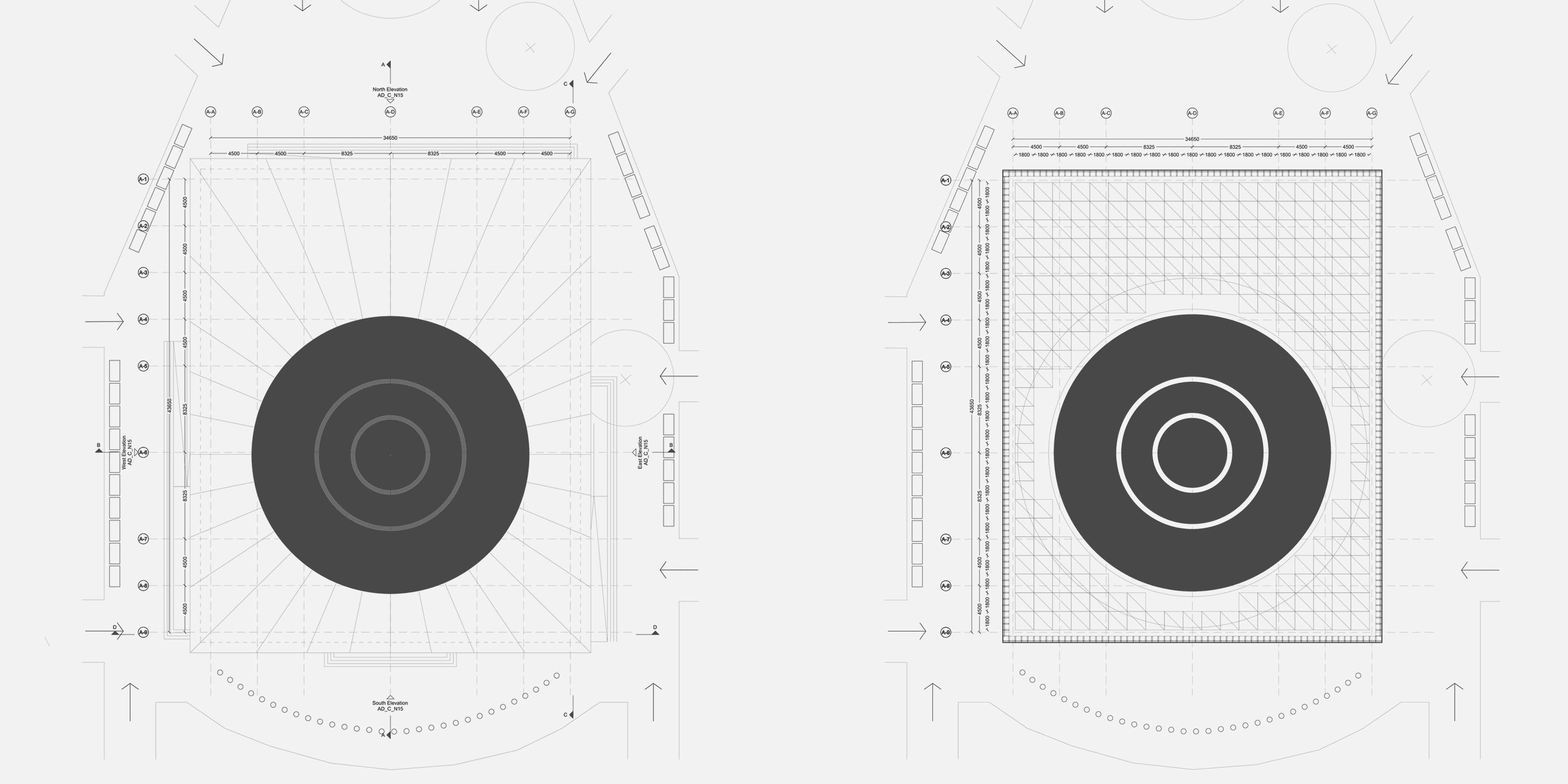
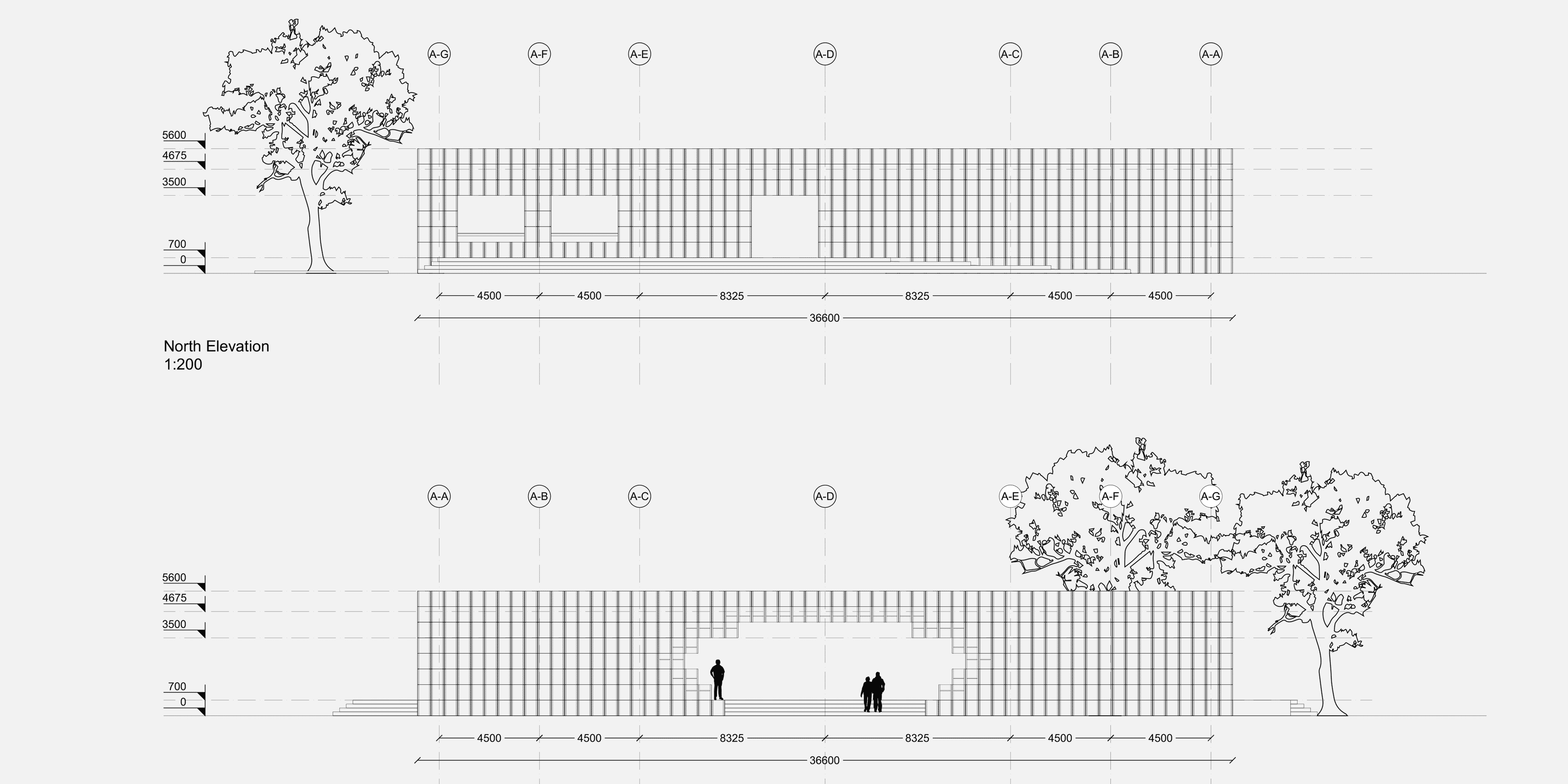
The chair functions as a 60 × 60 × 70 cm modular building block, designed for disassembly and repeated use. Using simple clamps, the elements can be securely connected and assembled into structures that scale from furniture to spatial systems, enabling multiple configurations across different contexts and repeated use over time. This allows the pavilion to be continuously reconfigured and redeployed, extending both the lifespan and relevance of the system.